Deep Dive into the Abrasion Resistance Mechanism of PU Steel Wire Reinforced Hoses: Why Can They Withstand the Most Demanding Wear Conditions?
In the field of industrial material conveyance, abrasion is one of the most severe challenges that hoses face. Whether it is slurry transport in the mining industry, wood dust extraction in woodworking machinery, or granular material handling in food processing, the inner walls of hoses are subjected to continuous friction and impact. Among the wide range of hose materials, PU (polyurethane) steel wire reinforced hoses stand out with their exceptional abrasion resistance, making them the preferred solution for many high-wear applications.
The outstanding abrasion resistance of PU steel wire reinforced hoses is no coincidence — it stems from the material's unique microstructure and scientifically engineered reinforcement design. This article provides an in-depth analysis of the abrasion resistance mechanism of PU steel wire reinforced hoses from a materials science perspective.
I. The Microstructure of Polyurethane: The Molecular Root of Abrasion Resistance
Polyurethane is a block copolymer with alternating hard segments and soft segments. This unique molecular architecture is the fundamental source of its superior abrasion resistance.
The Role of Hard Segments
The hard segments in the polyurethane molecular chain are formed by the reaction of isocyanates and chain extenders. The molecules are interconnected through hydrogen bonds, creating a strong physical crosslinking network. These hydrogen bonds endow the material with exceptionally high cohesive strength and tear resistance. When abrasive particles exert impact forces on the hose wall, the hard segment network effectively distributes the stress, preventing the material from being cut or torn. The content and arrangement of hard segments directly determine the hardness and abrasion resistance grade of the polyurethane — the higher the hard segment content, the greater the rigidity and abrasion resistance of the material.
The Role of Soft Segments
The soft segments are typically composed of polyether or polyester polyols, which provide the material with excellent elasticity and flexibility. The presence of soft segments allows the polyurethane to undergo elastic deformation when impacted by abrasive particles, absorbing the impact energy and then rapidly recovering its original shape. This "overcoming hardness with softness" mechanism means that polyurethane does not develop fatigue cracks under repeated impact like conventional rigid materials — instead, it dissipates the impact energy through elastic deformation.
The Synergistic Effect of Hard and Soft Segments
The hard segments provide strength and cutting resistance, while the soft segments provide elasticity and energy absorption capability. The synergy between the two enables polyurethane to simultaneously possess high hardness and high elasticity — two seemingly contradictory properties. It is precisely this "balanced rigidity and flexibility" microstructure that gives polyurethane abrasion resistance far exceeding that of conventional rubber and plastic materials. In Taber abrasion testing, high-quality polyurethane exhibits a wear volume only 1/5 to 1/10 that of natural rubber and 1/3 to 1/2 that of conventional plastics.
II. Steel Wire Reinforcement Structure: From Material-Level to Structure-Level Abrasion Resistance
Having an abrasion-resistant hose wall material alone is not sufficient. The reason PU steel wire reinforced hoses can operate reliably under high-pressure, high-wear conditions over the long term also lies in their scientifically designed wire reinforcement structure.
The Supporting Role of the Spiral Steel Wire Skeleton
High-strength galvanized steel wire or stainless steel wire is embedded within the PU steel wire reinforced hose, forming a spiral skeleton structure. This steel wire skeleton not only provides the hose with compression resistance and negative pressure resistance — preventing the hose body from collapsing during vacuum suction or expanding under high-pressure conveyance — but also offers additional structural support to the hose wall. When abrasive particles strike the hose wall at high velocity, the steel wire skeleton effectively distributes the impact force, preventing localized stress concentration that could lead to wall perforation.
The Interface Bonding Between Steel Wire and Polyurethane
In high-quality PU steel wire reinforced hoses, the steel wire surface undergoes special treatment to form a strong interfacial bond with the polyurethane matrix. This bonding ensures that the steel wire does not delaminate from the hose wall under prolonged bending, stretching, and vibration conditions, maintaining the structural integrity and durability of the hose. The quality of this interfacial bonding directly affects the service life of the hose and is one of the key factors distinguishing product quality levels.
Optimized Wall Thickness Design
The wall thickness of PU steel wire reinforced hoses is precisely calculated to maximize the thickness of the abrasion-resistant layer while maintaining flexibility. Some products specifically designed for high-wear applications also feature a thickened inner wall design to further extend service life.
III. Wear Failure Modes and Countermeasures of PU Steel Wire Reinforced Hoses
Understanding the wear failure modes of hoses helps to better comprehend their abrasion resistance mechanism. PU steel wire reinforced hoses primarily face the following types of wear in actual operating conditions:
Abrasive Wear
This is the most common form of wear, caused by the sliding and rolling friction of solid particles (such as mineral powder, sand, wood chips, etc.) on the hose wall surface. The high elasticity and high cohesive strength of polyurethane enable it to effectively resist the cutting action of abrasive particles. When abrasive particles strike the hose wall, the polyurethane surface undergoes localized elastic deformation, "bouncing" the particles away rather than being cut, thereby significantly reducing material loss.
Impact Wear
In pneumatic conveyance or large-particle material transport, materials strike the hose wall at relatively high velocities, generating impact wear. The elastic deformation capability of the polyurethane soft segments allows it to absorb impact energy, while the hydrogen bond network of the hard segments prevents the material from fracturing or spalling under impact. This dual protection mechanism makes polyurethane perform exceptionally well under impact wear conditions.
Fatigue Wear
During prolonged use, the hose undergoes repeated bending and vibration, which can cause micro-cracks in the wall material due to fatigue. The excellent fatigue resistance of polyurethane enables it to maintain structural integrity after repeated deformation without developing fatigue cracks. The presence of the steel wire skeleton further enhances the fatigue resistance of the hose.
Erosive Wear
In applications involving liquid-solid two-phase media, the high-velocity flow of the medium exerts an erosive effect on the hose wall. The high strength and smooth inner wall of polyurethane effectively resist erosion, while the smooth inner wall also reduces the frictional resistance of medium flow, minimizing the occurrence of erosion.
IV. Key Factors Affecting Abrasion Resistance Performance
Although polyurethane material inherently possesses excellent abrasion resistance, the final product's wear performance is also influenced by the following factors:
Polyurethane Hardness Grade
The hardness of polyurethane is typically expressed in Shore hardness. The common hardness range for hose-grade polyurethane is Shore A 85 to Shore A 98. The higher the hardness, the stronger the cutting resistance, but the lower the flexibility. Selection requires finding the right balance between abrasion resistance and flexibility based on the specific application conditions.
Differences Between Polyester-Type and Polyether-Type
Polyester-type polyurethane offers higher mechanical strength and abrasion resistance, making it suitable for high-wear applications. Polyether-type polyurethane provides better hydrolysis resistance and low-temperature elasticity, making it suitable for humid environments or low-temperature applications. The choice between the two types directly affects the hose's abrasion-resistant service life under specific operating conditions.
Steel Wire Material and Specifications
The material of the steel wire (galvanized steel wire, stainless steel wire), its diameter, and the spiral pitch all affect the overall abrasion resistance and service life of the hose. For high-wear applications, it is recommended to select products with larger wire diameter and tighter spiral pitch.
Wall Thickness
The thicker the wall, the thicker the abrasion-resistant layer and the longer the service life, but flexibility will be correspondingly reduced. The appropriate wall thickness should be selected based on the actual wear severity and bending requirements of the application.
V. Typical Applications and Abrasion Performance
The abrasion resistance of PU steel wire reinforced hoses has been thoroughly validated in the following typical applications:
Woodworking Machinery Dust Extraction
In woodworking workshops, wood chips, dust, and fine particles are extracted and discharged at high velocity through hoses. The smooth inner wall of PU steel wire reinforced hoses reduces dust adhesion, while the high abrasion resistance ensures a long service life under prolonged high-velocity particle erosion — typically 3 to 5 times that of standard PVC hoses.
Mining Slurry Transport
In the mining industry, slurries containing large quantities of hard mineral particles are conveyed through hoses. With their outstanding resistance to both abrasive wear and impact wear, PU steel wire reinforced hoses demonstrate service lives far exceeding those of rubber hoses in slurry transport applications.
Food Processing Granular Material Conveyance
In the food processing industry, the conveyance of granular materials such as grains, sugar, and milk powder places high demands on both the abrasion resistance and hygiene of hoses. PU steel wire reinforced hoses not only offer exceptional abrasion resistance but are also non-toxic, odorless, and compliant with food-grade hygiene standards.
Industrial Vacuum Cleaning
In central vacuum cleaning systems in factory workshops, floor dust, metal fragments, glass shards, and other debris are sucked into collection devices through hoses. The abrasion resistance and compression resistance of PU steel wire reinforced hoses ensure the reliability of the system under prolonged high-load operation.
VI. Why Choose Our PU Steel Wire Reinforced Hoses?
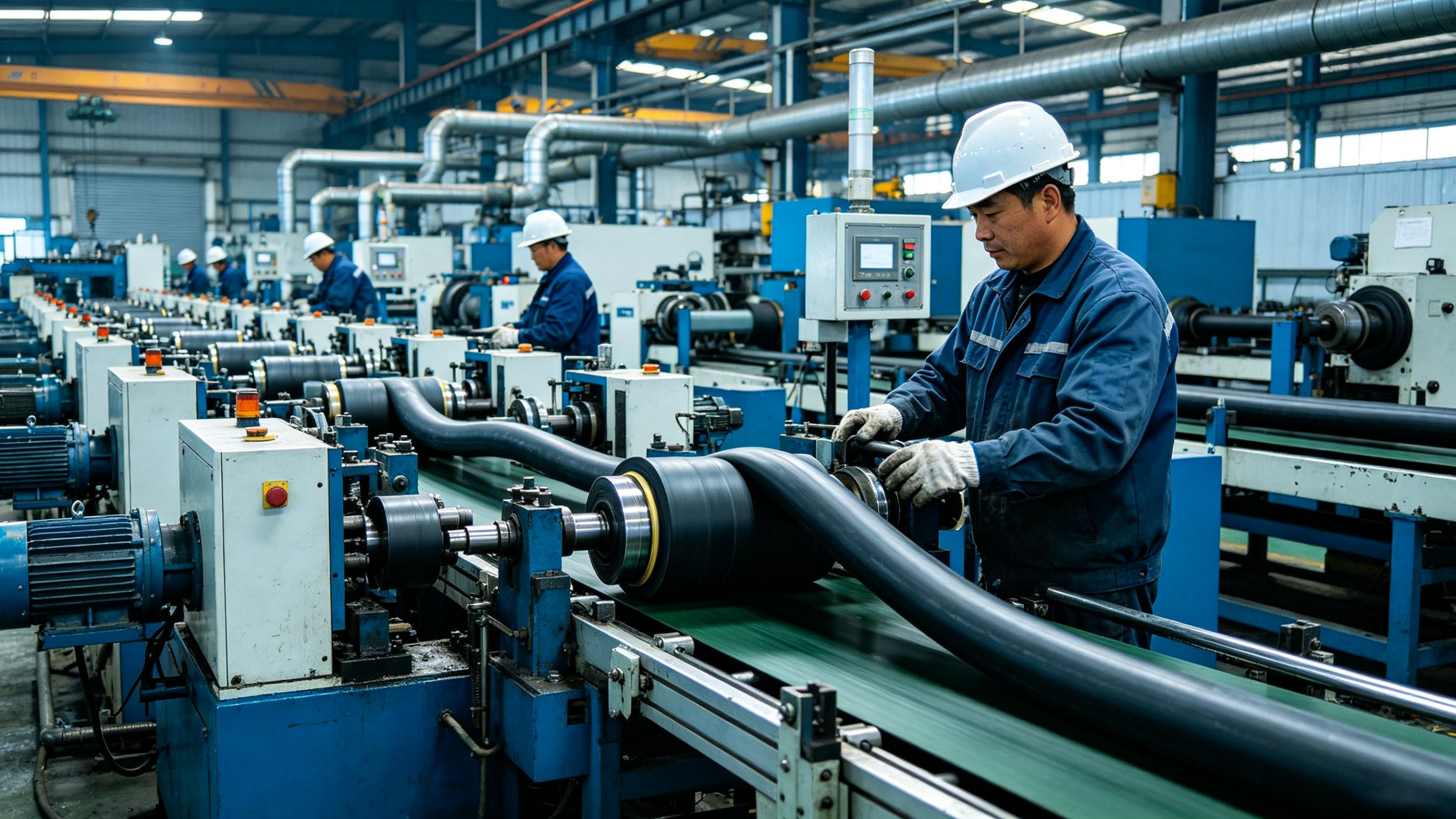
As a professional industrial hose manufacturer, our PU steel wire reinforced hoses are manufactured using premium polyester-type polyurethane materials and high-strength galvanized steel wire, produced through precision extrusion molding processes. The uniform wall thickness and evenly distributed steel wire ensure that every hose delivers exceptional abrasion resistance and reliable compression resistance.
We offer PU steel wire reinforced hoses in multiple hardness grades, diameters, and wall thickness specifications, and can provide customized solutions based on specific application requirements, including food-grade certification, anti-static design, and low-temperature formulations.
If you are looking for a long-life hose solution for high-wear applications, or need specific product technical parameters and quotations, please feel free to contact us. Our technical team will provide you with professional selection advice.