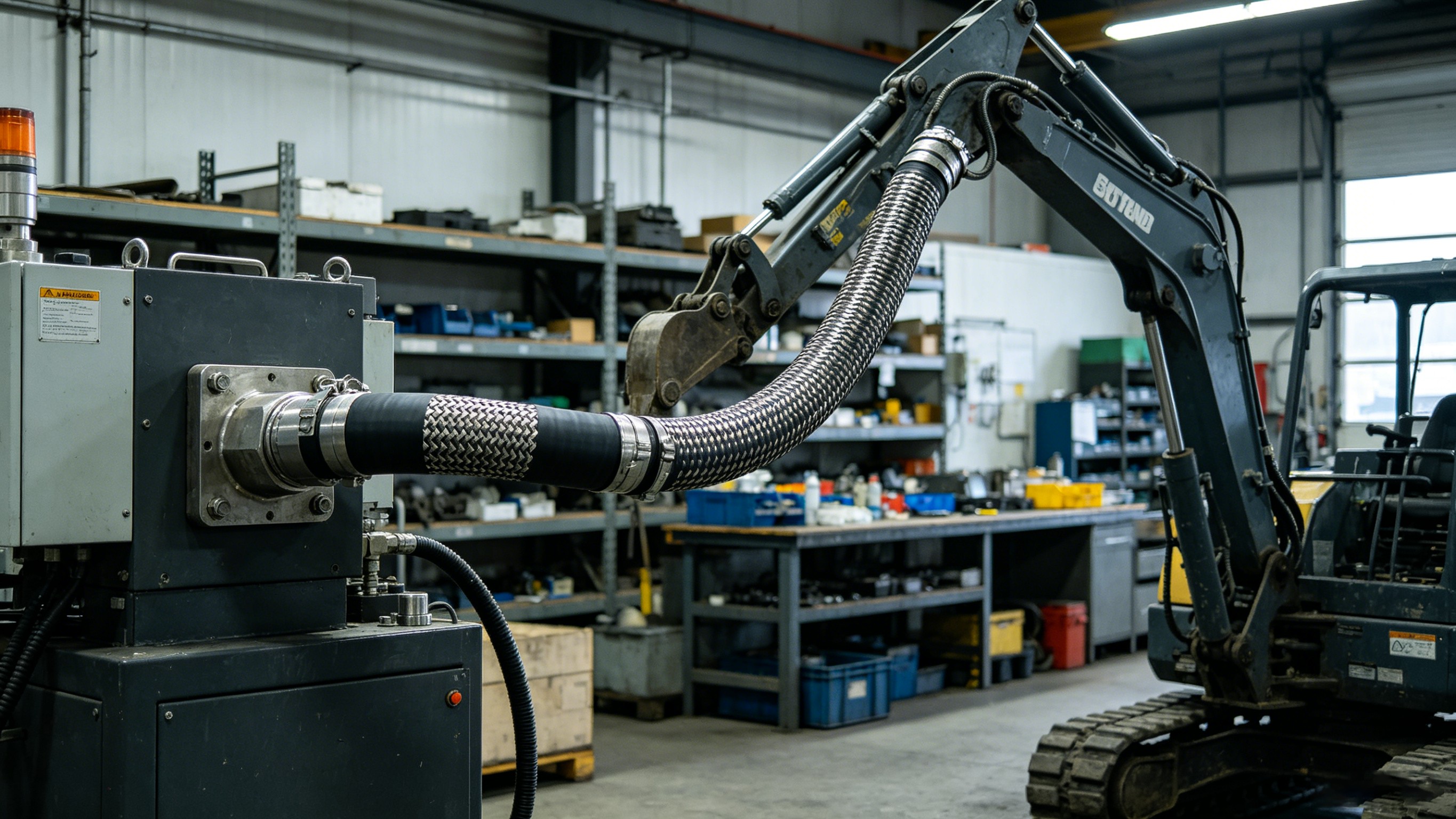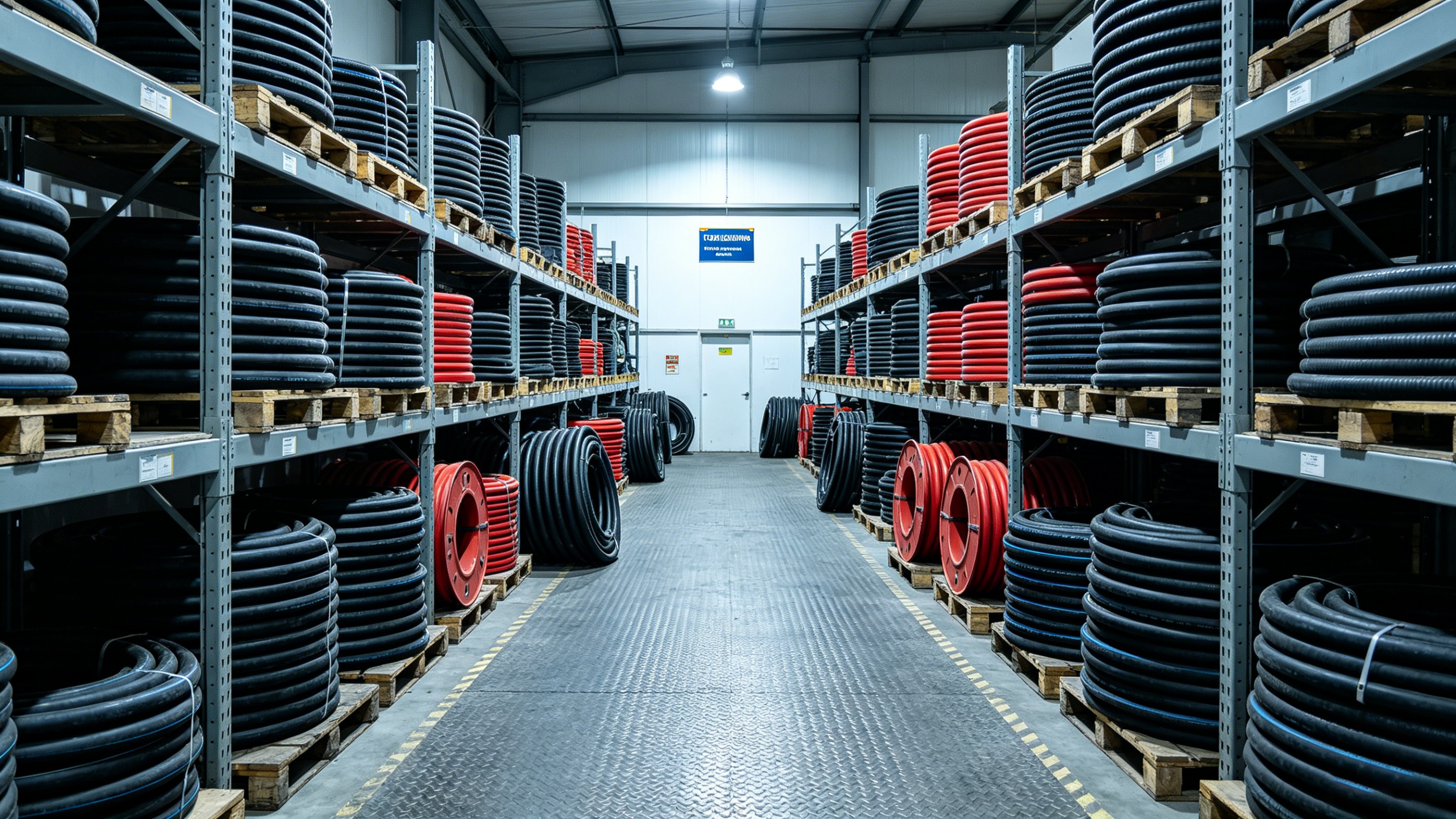
Technical Deep Dive: How Ultra-High-Pressure Cleaning Hoses Withstand Extreme Pressures Over 100MPa
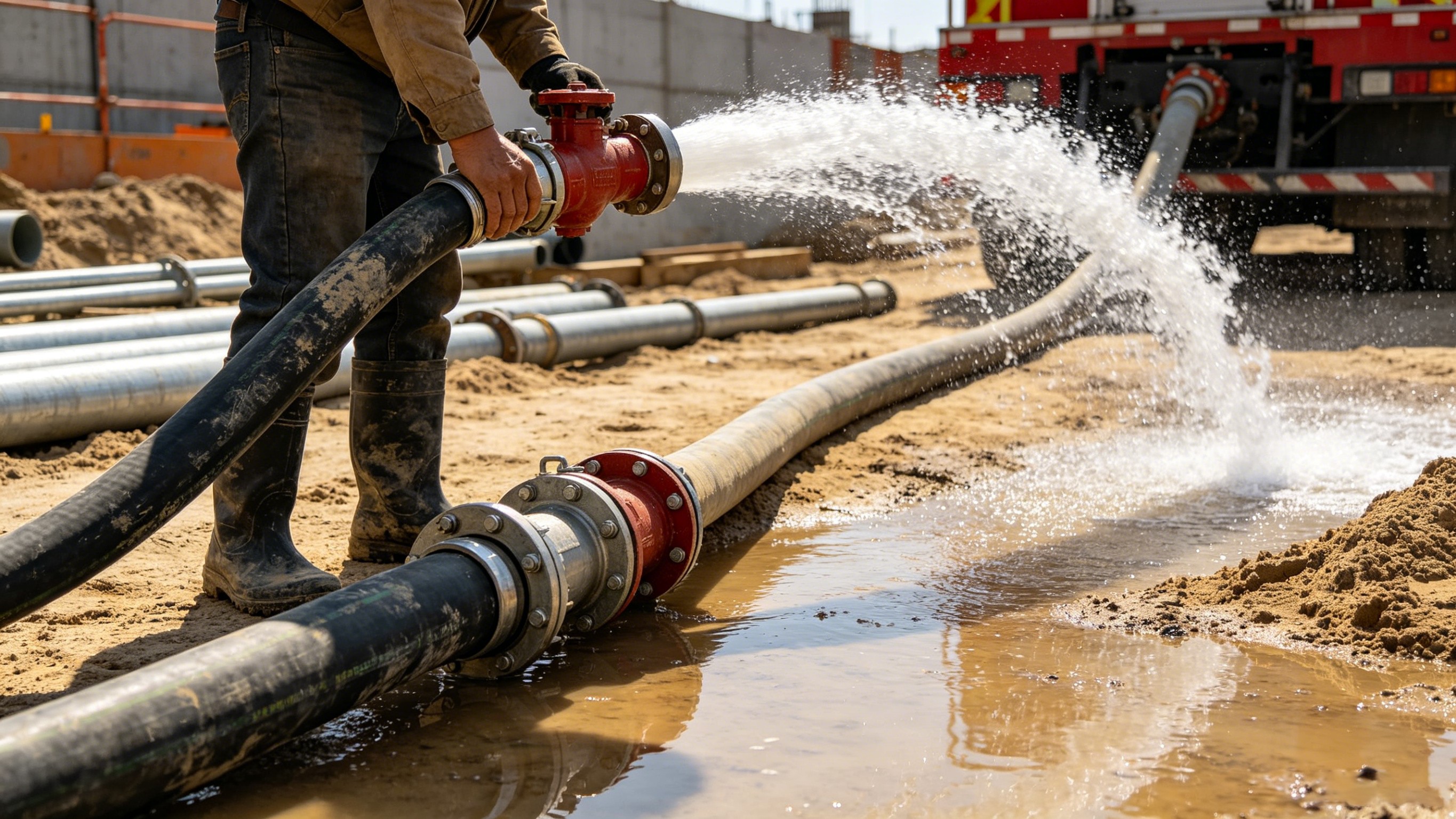
In industrial cleaning, ultra-high-pressure cleaning hoses are among the most critical wear parts on equipment. When working pressure exceeds 100MPa, standard hoses quickly fail due to pressure surges, media corrosion, or structural defects — causing costly downtime or even safety incidents from high-pressure leaks. As a direct manufacturer, we break down the technical core of our ultra-high-pressure cleaning hoses across three dimensions: material selection, structural design, and manufacturing process.
Inner Layer: The Foundation for Oil, Abrasion, and Pulse Resistance
The inner layer is in direct contact with cleaning media (typically water-based cleaners, hydraulic oil, or weak acid/alkali solutions), so its material properties directly determine the hose's media resistance and service life. We use a specially formulated synthetic rubber with three core characteristics:
Oil resistance: By adjusting the rubber's molecular chain structure, the volume swell rate is ≤5% after 72 hours of immersion in 120# gasoline or hydraulic oil, preventing inner layer cracking from swelling;
Abrasion resistance: Nano-scale wear-resistant fillers are added to reduce the Akron abrasion value to ≤0.3cm³/1.61km — 3 times that of standard rubber — effectively resisting erosion from tiny particles carried in the cleaning media;
Pulse resistance: The elastic modulus of the inner rubber is optimized for the pulse pressure characteristics of high-pressure washers, maintaining structural integrity after over 10,000 pulse cycles to avoid fatigue cracking from repeated pressure fluctuations.
Reinforcement Structure: The Pressure-Bearing Core of Multi-Layer Steel Wire Braiding
The pressure-bearing capacity of ultra-high-pressure cleaning hoses relies entirely on the reinforcement layer. We use a "multi-layer steel wire braiding + spiral winding" composite structure instead of traditional single-layer braiding:
Wire selection: We use high-strength galvanized steel wire with a diameter of 0.3-0.5mm and tensile strength ≥1800MPa — 1.5 times that of standard wire — to prevent breakage under high pressure;
Braiding layers: The number of layers is designed according to working pressure — 2 layers for 100MPa, 3 layers for 150MPa, and 4 layers for 200MPa and above. Each layer's braiding angle is controlled at 54°±2° to ensure even pressure distribution;
Spiral winding layer: A layer of thick spiral-wound steel wire (1.0-1.5mm diameter) is added outside the braiding layer as a "safety backup." Even if one braiding layer is accidentally damaged, the spiral layer can temporarily bear the pressure to prevent instant bursting.
*
Outer Layer Protection*: The "Armor" for Complex Working Conditions
The outer layer is the first line of defense against the external environment. We use weather-resistant chloroprene rubber or TPV material with the following features:
Ozone and UV resistance: Anti-aging agents are added so the outer layer shows no cracking after 2,000 hours of outdoor exposure, making it suitable for outdoor cleaning stations;
Abrasion and flex resistance: The outer hardness is controlled at Shore A 65±5, resisting ground friction and equipment collisions while avoiding cracking during frequent bending — ideal for mobile cleaning equipment;
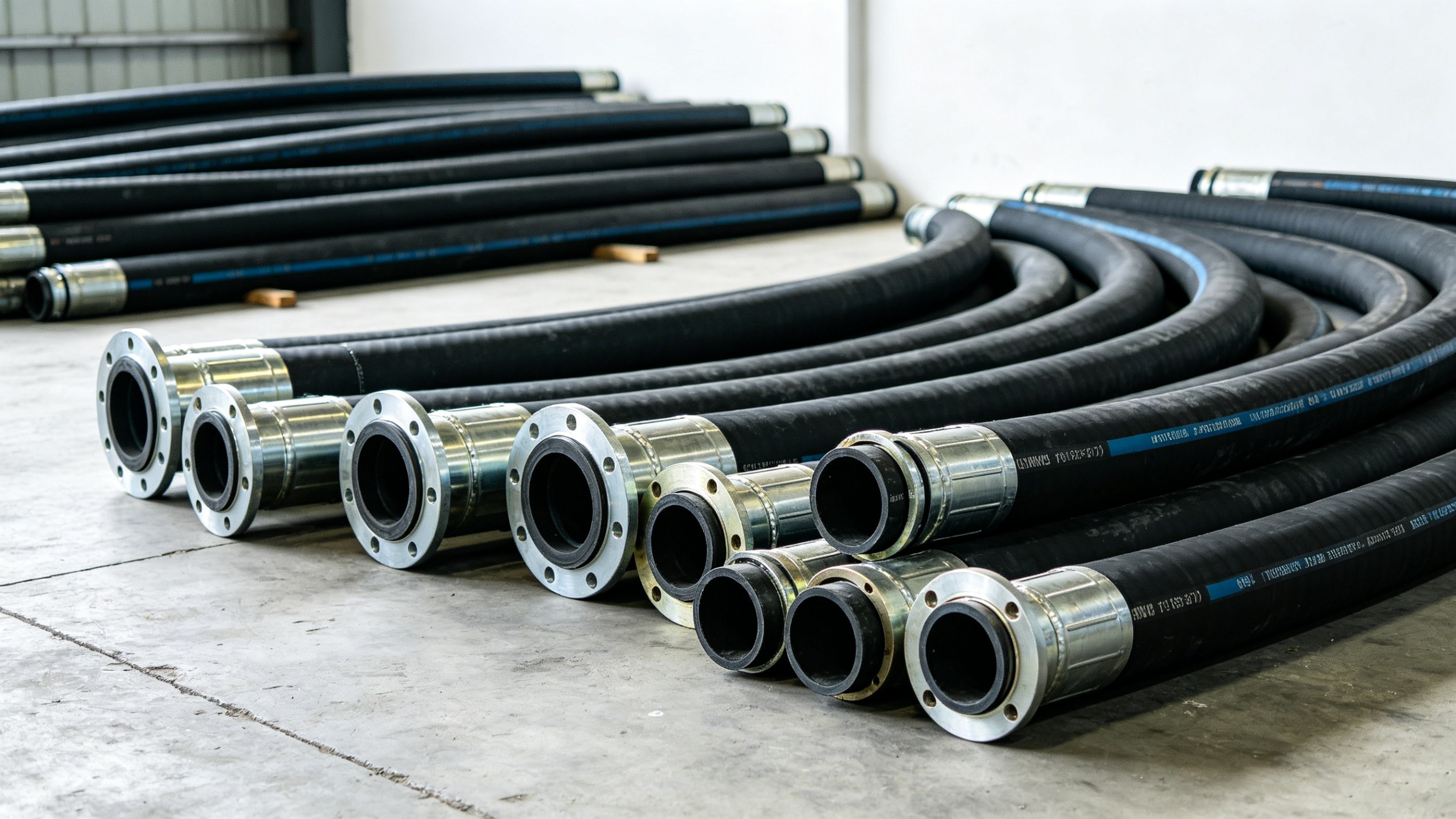
Clear marking: Working pressure, production batch, and certification standards are printed on the outer layer for easy on-site management and traceability.
Process Assurance: Full-Process Quality Control from Raw Material to Finished Product
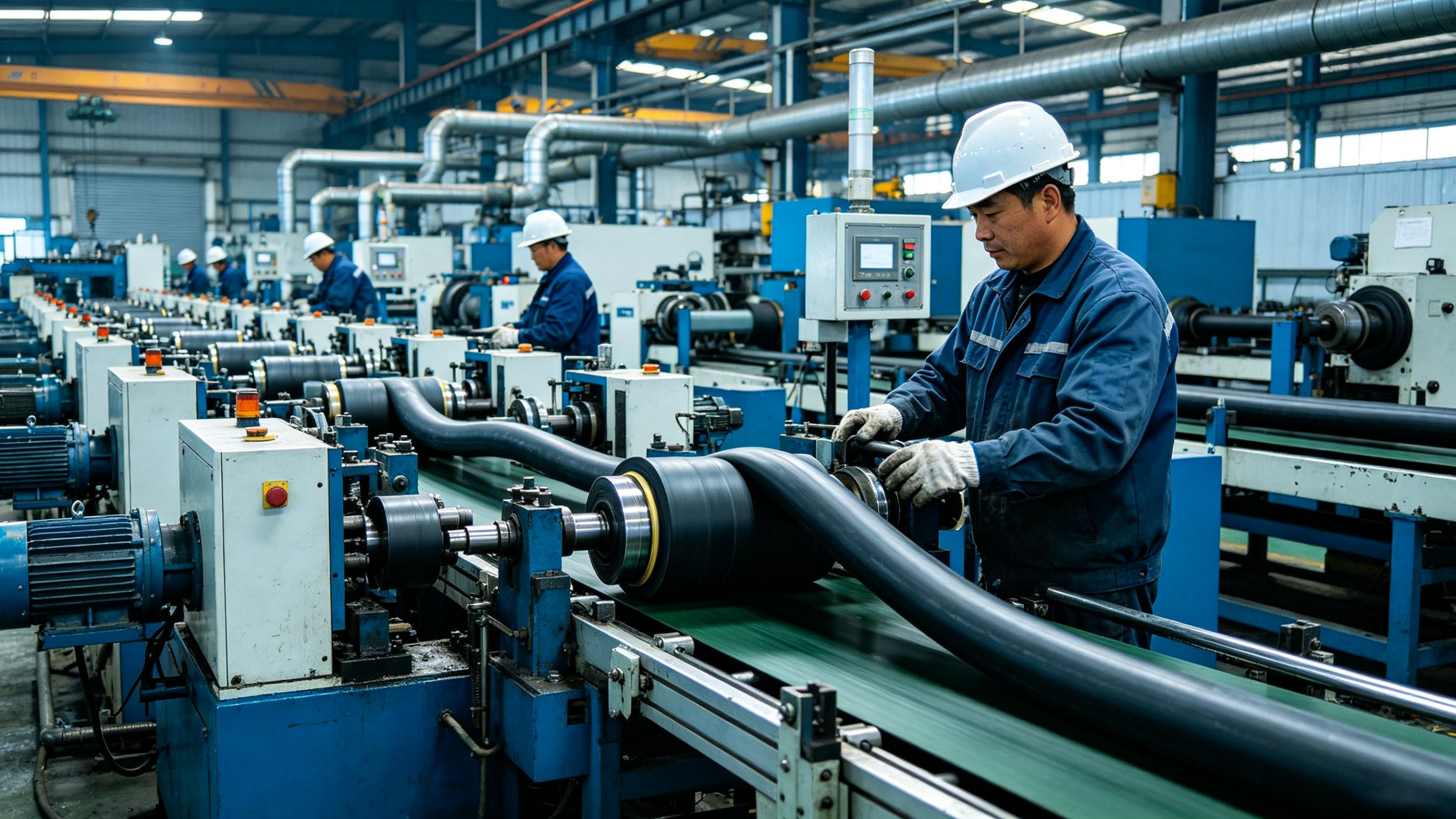
As a direct manufacturer, our production process directly determines product performance stability:
Inner layer extrusion: Cold-feed extruders are used with temperature controlled at 80-100℃ to ensure uniform rubber plasticization, with inner layer wall thickness deviation ≤0.2mm;
Steel wire braiding: High-speed braiding machines are used with braiding density ≥90% to ensure no gaps between wires and uniform pressure transmission;
Vulcanization process: A segmented vulcanization process is used — the inner layer, reinforcement layer, and outer layer are vulcanized separately to avoid the interlayer debonding issues common in traditional single-step vulcanization;
Testing standards: Every hose undergoes 1.5x working pressure static pressure testing, burst pressure testing (burst pressure ≥4x working pressure), and pulse testing (10,000 cycles) before shipment, meeting ISO 1436 and SAE 100R12 standards.
Selection Tips: How to Match Ultra-High-Pressure Cleaning Hoses to Your Application
Define working pressure: Choose hoses with burst pressure ≥4x working pressure to leave a safety margin;
Confirm media type: Use oil-resistant rubber inner layers for water-based cleaners, and acid/alkali-resistant rubber for corrosive media;
Consider working environment: Choose weather-resistant outer layers for outdoor use, abrasion-resistant outer layers for frequent movement, and small bending radius designs for tight spaces.
If you have specific working parameters (working pressure, media, temperature), feel free to contact our technical team for a one-on-one selection solution.