How to Choose the Right Pressure Rating and Wall Thickness for Nylon Resin High-Pressure Hoses
When purchasing nylon resin high-pressure hoses, customers most often ask two questions: "What pressure can this hose withstand?" and "What wall thickness should I choose?" In fact, when it comes to pressure rating and wall thickness, bigger is not always better. Choosing too high a rating wastes cost, while choosing too low a rating creates safety risks. The correct approach is to match the hose to the actual working conditions by considering working pressure, burst pressure, inner diameter, temperature, media, and fittings.
1. First, Clarify Working Pressure and Burst Pressure
The first step in selection is to determine the maximum working pressure of the system, not the average pressure.
Working pressure: The maximum pressure during normal system operation.
Burst pressure: The pressure at which the hose ruptures, usually required to be 2.5–4 times the working pressure.
Safety factor: It is generally recommended that the working pressure does not exceed 1/2 to 1/3 of the hose's rated working pressure.
For example, if the system's maximum working pressure is 100 bar, it is advisable to choose a nylon resin high-pressure hose with a rated working pressure of 200–300 bar to ensure sufficient safety margin.
It is important to note that pulsating pressure and peak pressure also affect hose life. If the system experiences frequent pressure fluctuations, choose a higher pressure rating or a reinforced structure.
2. The Relationship Between Pressure Rating and Wall Thickness
The pressure resistance of a nylon resin high-pressure hose mainly depends on material strength, wall thickness, and reinforcement structure.
Greater wall thickness means stronger pressure resistance, but also increased weight and bending radius.
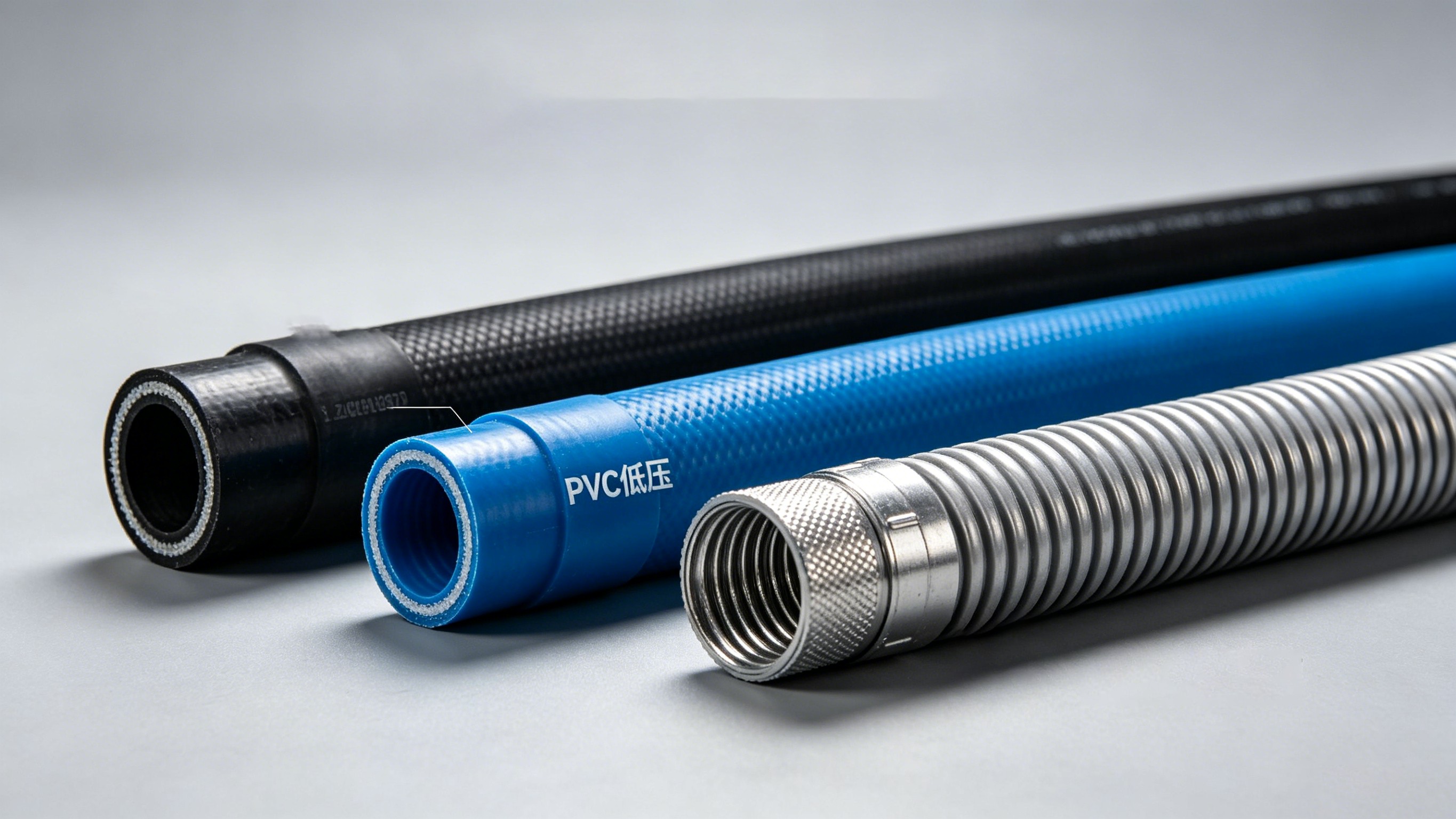
Reinforcement layer: Multi-layer composite or reinforced nylon hoses have significantly higher pressure resistance than single-layer nylon hoses.
Larger inner diameter reduces pressure resistance at the same wall thickness, because the hoop stress on the hose wall is greater.
Therefore, you cannot judge by wall thickness alone. You also need to consider inner diameter and structure. In general:
Small diameter, thin wall: suitable for low pressure, precision pressure measurement, and space-limited applications;
Medium diameter, medium wall thickness: suitable for general hydraulic systems and industrial piping;
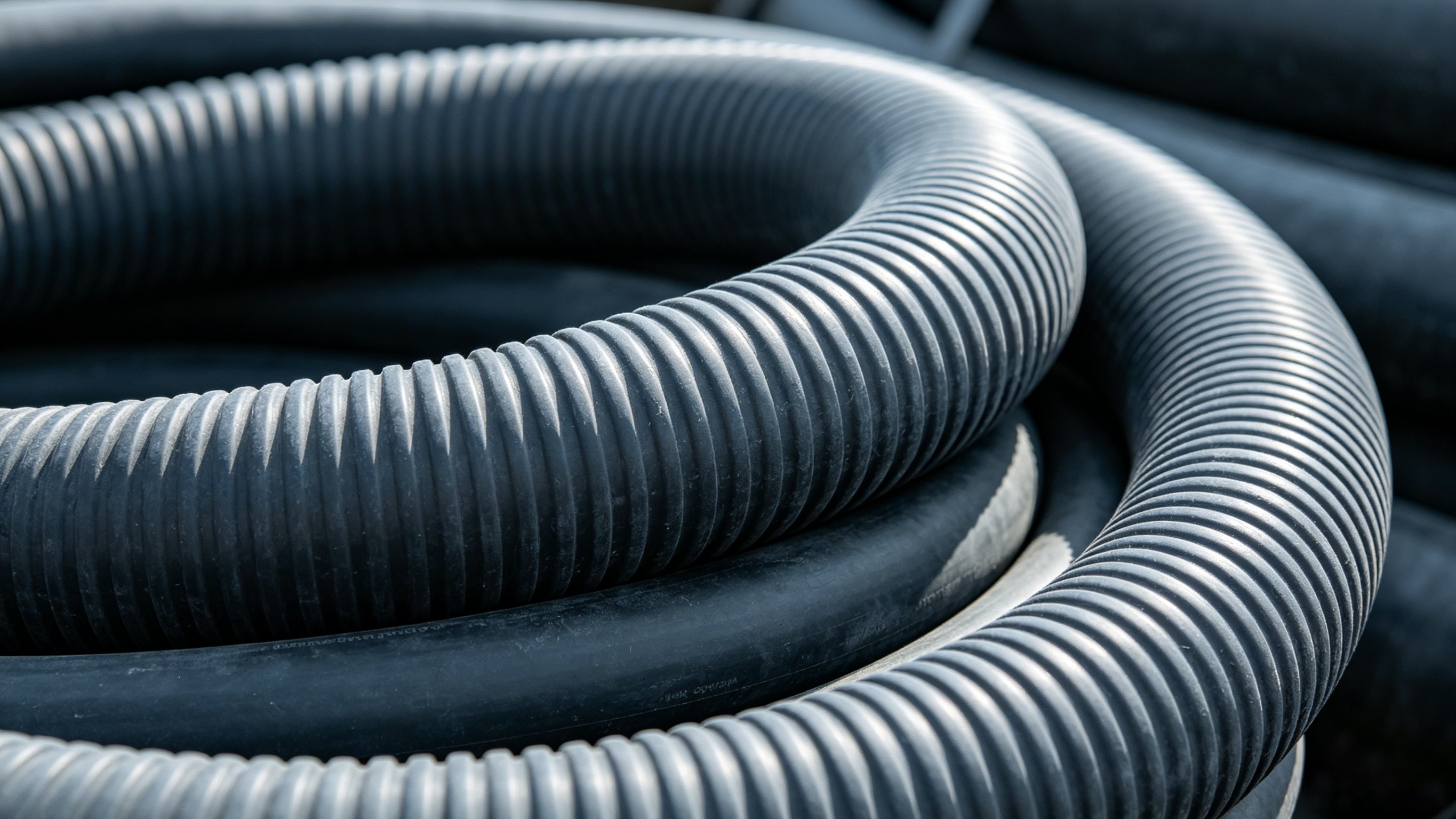
Large diameter, thick wall, or reinforced structure: suitable for high pressure, ultra-high pressure, and pulsating conditions.
3. Determine Installation Space Based on Inner and Outer Diameter
The inner diameter affects flow rate and pressure loss, while the outer diameter affects installation space and bending radius.
Inner diameter: Choose based on system flow requirements. Too small an inner diameter causes high pressure loss and excessive flow velocity; too large an inner diameter increases cost and installation space.
Outer diameter: Confirm whether equipment interfaces and piping layout allow it.
Bending radius: Nylon resin high-pressure hoses have a small bending radius, but excessive bending still affects service life. It is recommended not to go below the manufacturer's recommended minimum bending radius.
4. Confirm the Working Temperature Range
The temperature resistance of nylon resin materials is limited, and different grades vary significantly. When selecting, confirm:
Long-term working temperature: Whether it is within the hose's allowable range;
Short-term peak temperature: The maximum temperature during startup or abnormal conditions;
Ambient temperature: Pay special attention to high-temperature environments such as outdoors or engine compartments.
If the actual temperature approaches or exceeds the material limit, choose a high-temperature resistant grade or switch to a hose made of another material.
5. Confirm Media Compatibility
Nylon resin has good resistance to hydraulic oil, lubricating oil, fuel, and many chemical media, but it is not universal. When selecting, confirm:
Whether the conveyed medium is oil, water, gas, or chemical liquid;
Whether the medium concentration and long-term contact will cause swelling, aging, or performance degradation;
Whether food-grade or special certification is required.
For strong acids, strong alkalis, or special solvents, it is recommended to conduct a compatibility test first or consult the manufacturer.
6. Choose the Right Fittings and Connection Methods
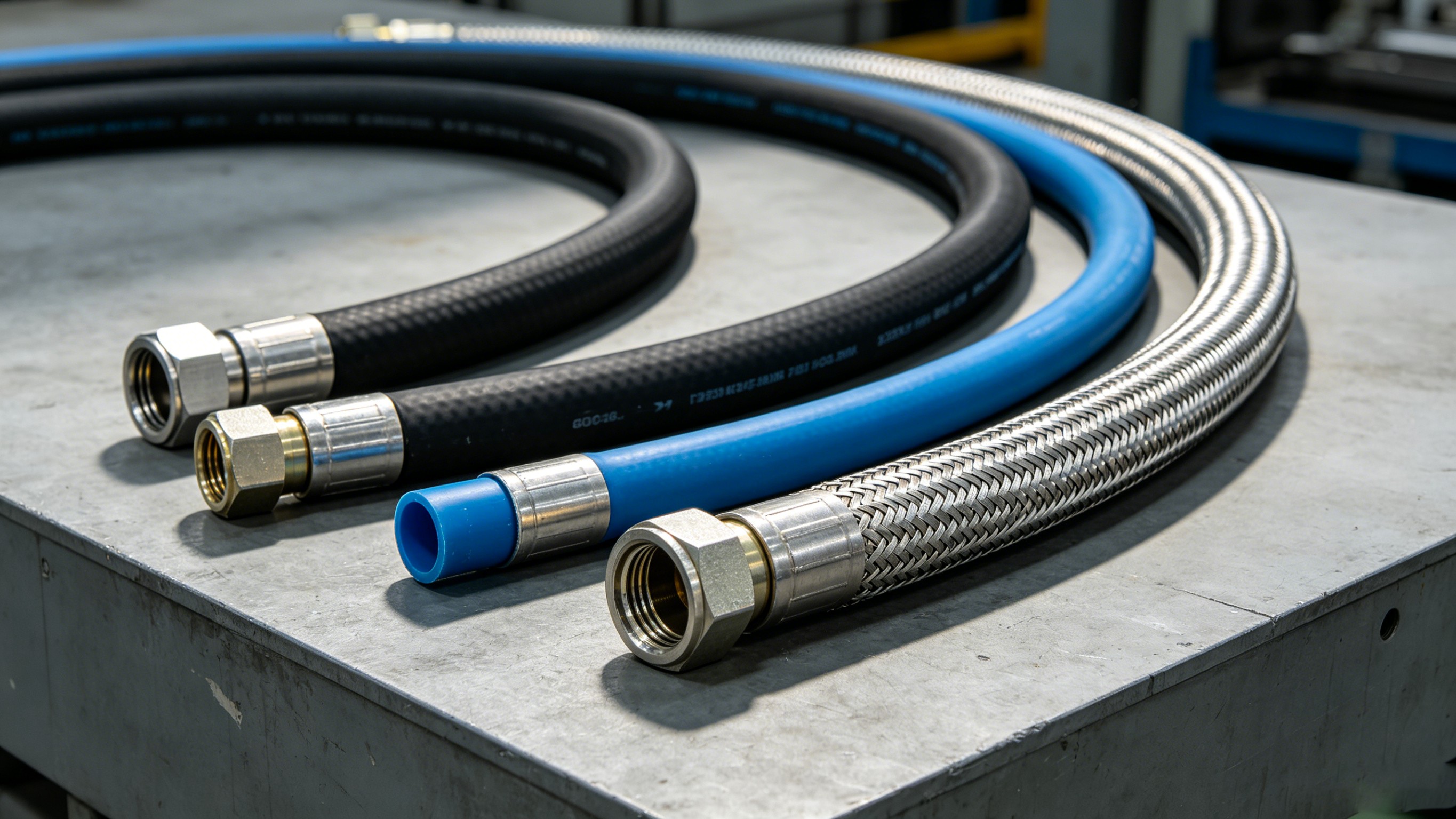
The connection method of a nylon resin high-pressure hose directly affects sealing performance and safety. Common fittings include:
Quick-connect fittings: Easy to install, suitable for frequent assembly and disassembly;
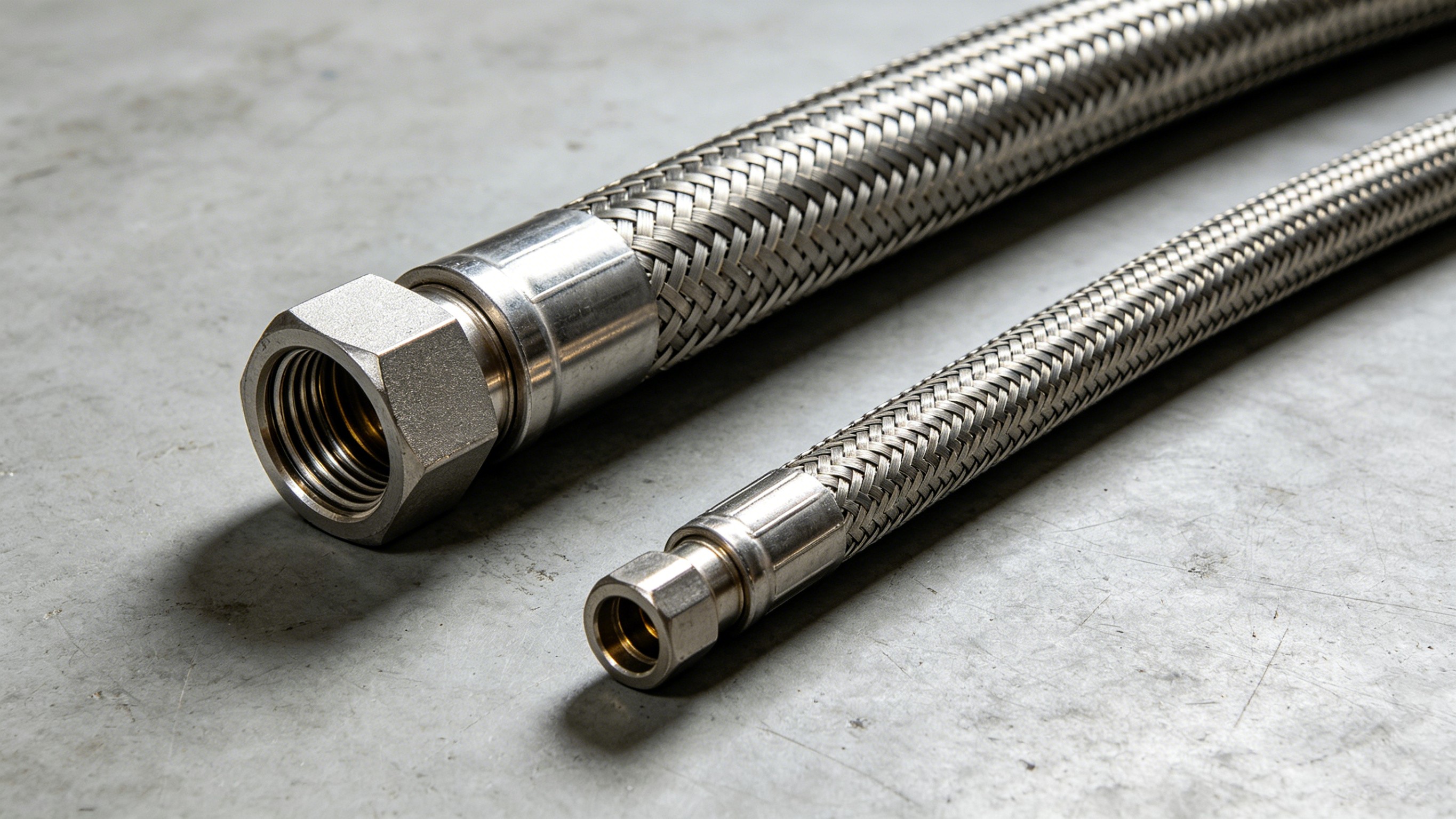
Threaded fittings: Reliable sealing, suitable for fixed piping;
Pressure test fittings: Used for pressure gauge and sensor connections;
Crimped fittings: Suitable for high pressure and pulsating conditions.
When selecting, confirm that the fitting pressure rating matches the hose to avoid leakage or detachment caused by a "strong hose, weak fitting" situation.
7. Common Selection Mistakes
Only looking at burst pressure, not working pressure
Burst pressure is only the limit value. For long-term use, refer to working pressure and safety factor.
Assuming thicker wall is always better
Increased wall thickness reduces flexibility and increases weight and cost. Choose according to actual needs.
Ignoring pulsating pressure
Frequent pressure fluctuations accelerate hose fatigue. Choose a pulse-resistant structure.
Ignoring temperature effects
Rising temperature reduces the pressure resistance of nylon material. High-temperature conditions require derating.
Mismatched fittings and hose
If the fitting pressure rating is lower than the hose, it becomes the weak point of the system.
8. Conclusion
The core of selecting a nylon resin high-pressure hose is "matching the working conditions," not "bigger is better." It is recommended to follow this selection order:
Determine the maximum working pressure and pulsating conditions;
Choose the appropriate pressure rating and reinforcement structure;
Determine inner and outer diameter based on flow and space;
Confirm temperature range and media compatibility;
Choose matching fittings and connection methods.
As a hose manufacturer, we produce nylon resin high-pressure hoses, nylon resin pressure measuring hoses, PU polyurethane steel wire hoses, PU polyurethane ribbed hoses, ultra-high-pressure cleaning hoses, and TPV rubber hoses. We can provide selection advice for different working conditions. If you are unsure which pressure rating or wall thickness to choose, welcome to contact us. We can recommend a suitable solution based on your actual parameters.