PU Steel Wire Hose vs PU Ribbed Hose: What's the Difference and How to Choose
In industrial vacuuming, ventilation, dust collection, and material conveying, PU polyurethane hoses are widely used because of their wear resistance, flexibility, and oil resistance. Among them, PU steel wire hoses and PU ribbed hoses are two of the most common types. Many customers ask us: what is the difference between these two hoses, and which one should I choose? This article compares them from structure, performance, and application to help you make the right choice.
1. Structure Difference
The most fundamental difference between the two hoses lies in their reinforcement structure.
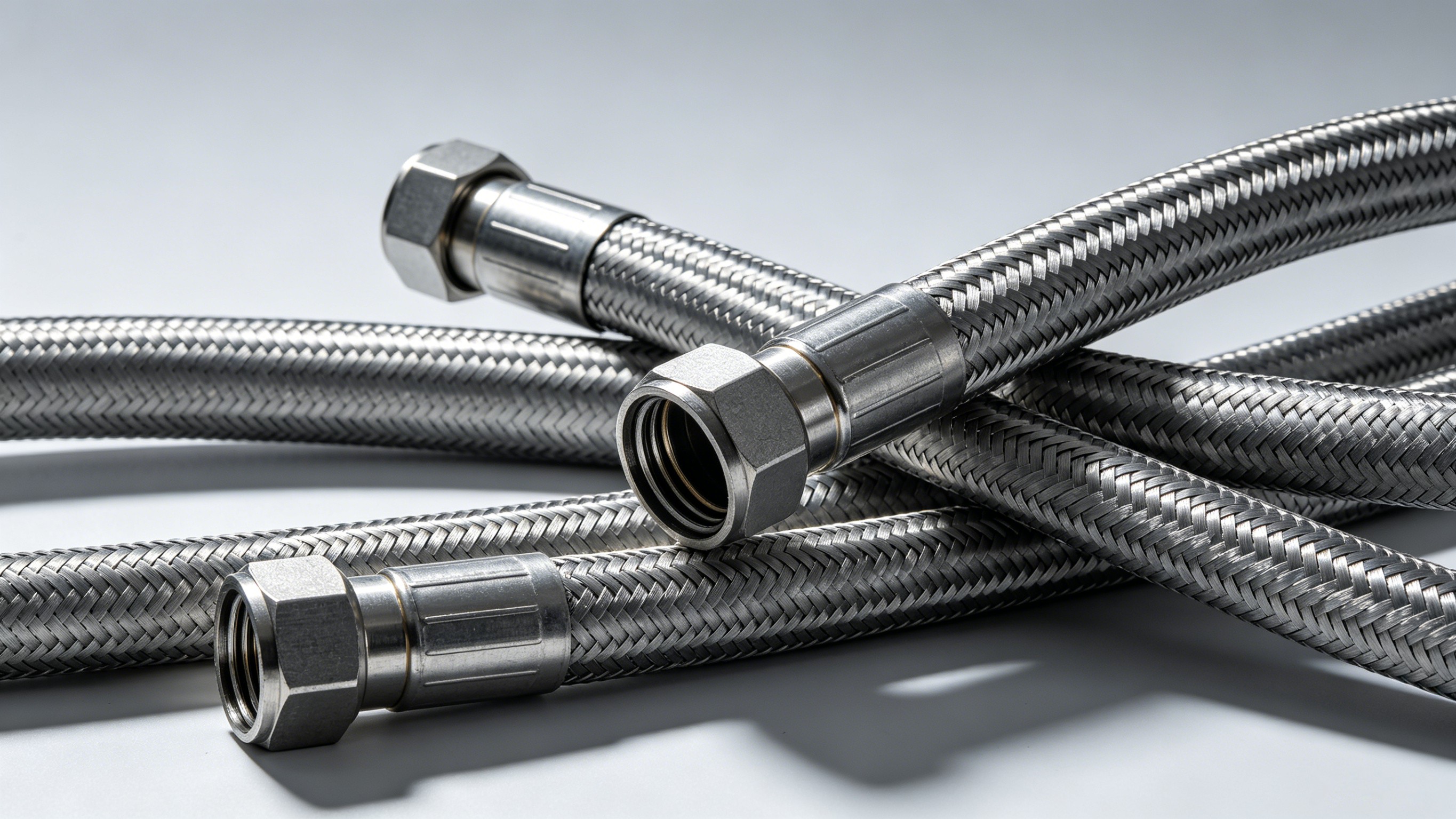
PU steel wire hose: A spiral steel wire is embedded in the hose wall. The steel wire provides strong structural support, making the hose resistant to vacuum and pressure.
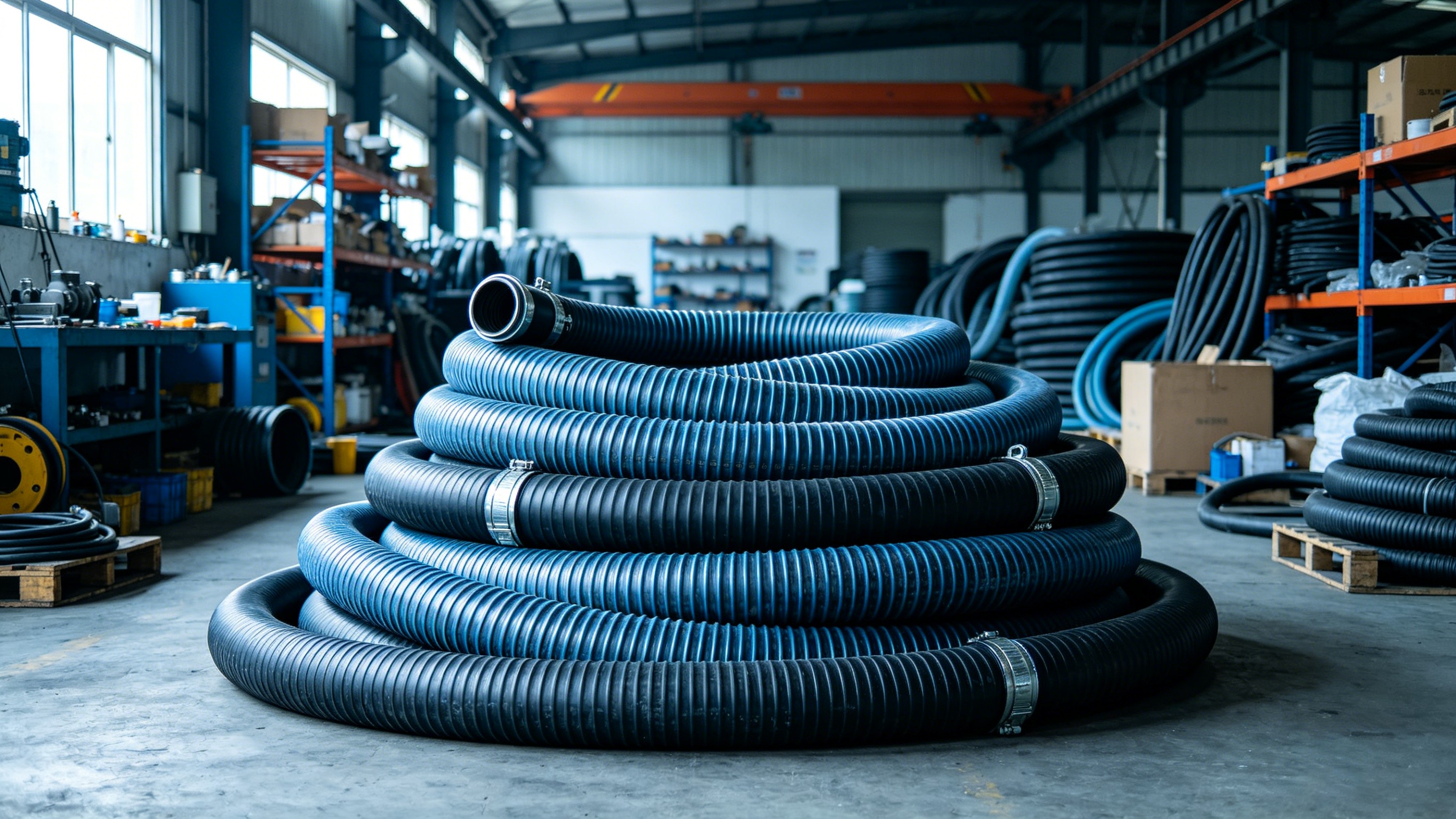
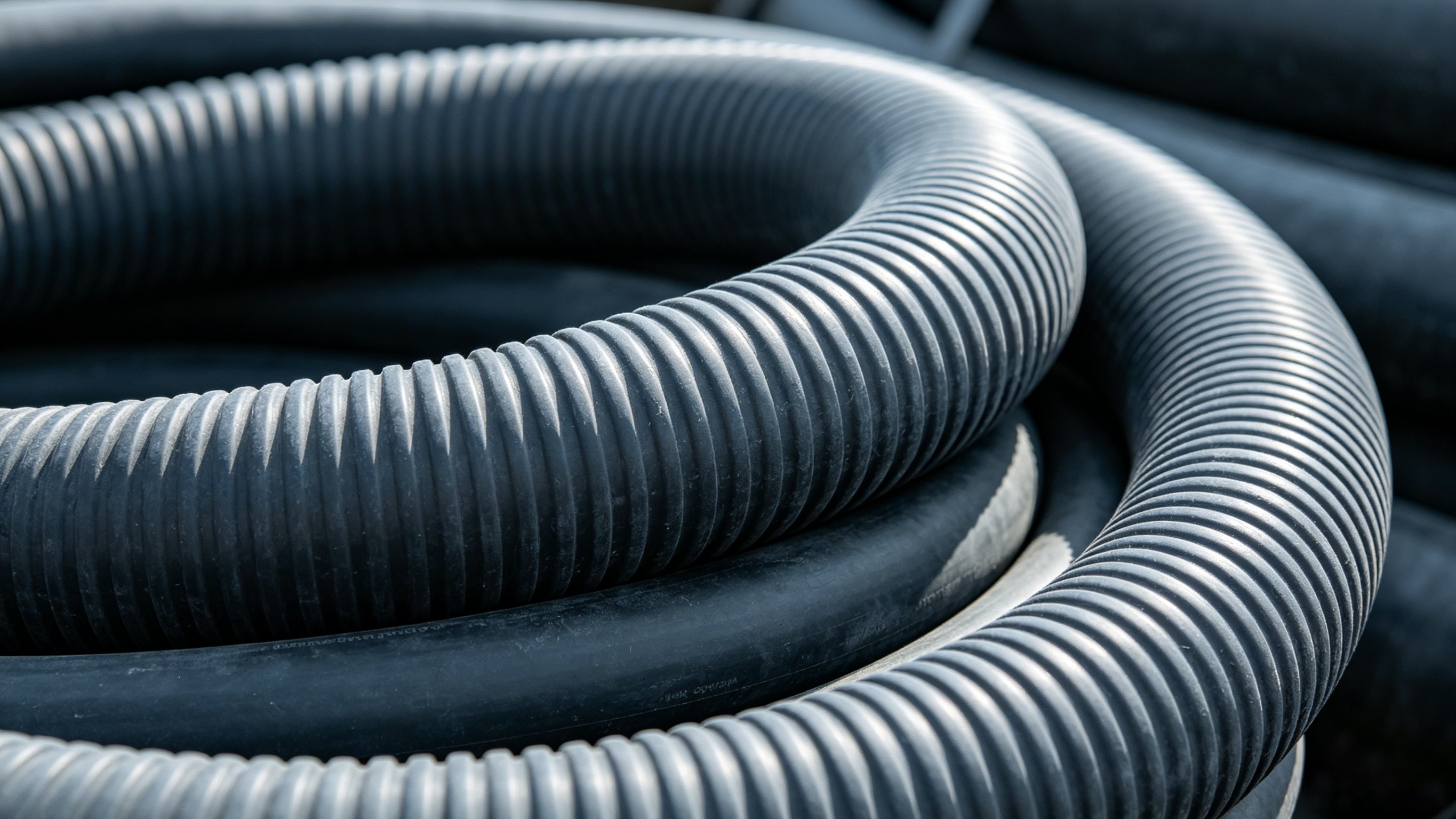
PU ribbed hose: A spiral plastic rib is formed on the hose wall. The plastic rib provides structural support while keeping the hose lighter and more flexible.
In simple terms, the steel wire hose uses a metal skeleton, while the ribbed hose uses a plastic skeleton. This difference directly affects their weight, flexibility, vacuum resistance, and cost.
2. Weight and Flexibility
PU steel wire hose: Heavier due to the steel wire reinforcement. It is still flexible, but the bending radius is relatively larger, and the hose is less easy to move.
PU ribbed hose: Lighter because of the plastic rib structure. It has a smaller bending radius and is easier to handle, install, and move.
If the application requires frequent movement, overhead installation, or operation in tight spaces, the PU ribbed hose is usually more convenient.
3. Vacuum Resistance
PU steel wire hose: Excellent vacuum resistance. The steel wire skeleton provides strong support and is not easy to collapse under high negative pressure.
PU ribbed hose: Good vacuum resistance, but generally lower than the steel wire hose. It is suitable for medium and low negative pressure conditions.
If the system operates under high negative pressure or the hose is long and horizontal, the PU steel wire hose is more reliable.
4. Wear Resistance
Both hoses use PU polyurethane material, so both offer good wear resistance. However:
PU steel wire hose: Usually has a thicker wall and higher wear resistance, suitable for conveying abrasive media such as wood chips, metal chips, and sand.
PU ribbed hose: Also wear-resistant, but because the wall is usually thinner, it is more suitable for light abrasive media such as dust, powder, and fibers.
For highly abrasive materials, choose a PU steel wire hose with greater wall thickness or a high wear-resistant grade.
5. Pressure and Temperature Range
PU steel wire hose: Can withstand both positive pressure and negative pressure, with a relatively wide working pressure range.
PU ribbed hose: Mainly used for negative pressure suction and low-pressure ventilation.
Both are limited by the temperature resistance of PU material, usually around -40°C to +90°C, depending on the specific grade. High-temperature versions are available.
6. Cost Comparison
PU steel wire hose: Higher material and production cost due to the steel wire reinforcement.
PU ribbed hose: Lower cost because of the simpler plastic rib structure.
If the working conditions do not require high vacuum resistance, the PU ribbed hose can reduce costs while meeting basic needs.
7. Application Comparison
Application Recommended Hose
High negative pressure vacuuming PU steel wire hose
Woodworking dust collection PU steel wire hose
Metal chip and sand conveying PU steel wire hose
Printing and packaging ventilation PU ribbed hose
Light dust and powder suction PU ribbed hose
Mobile vacuum cleaner PU ribbed hose
Long-distance horizontal suction PU steel wire hose
Space-limited installation PU ribbed hose
8. How to Choose
Follow these steps to choose between the two:
Determine the vacuum level: High negative pressure → steel wire hose; medium/low negative pressure → ribbed hose.
Check the conveyed media: Highly abrasive → steel wire hose; light dust/powder → ribbed hose.
Consider weight and flexibility: Frequent movement or tight space → ribbed hose.
Consider cost: If performance allows, ribbed hose is more economical.
Confirm temperature and chemical compatibility: Both need to match the actual working conditions.
9. Conclusion
PU steel wire hoses and PU ribbed hoses are both excellent polyurethane hoses, but they serve different purposes. The steel wire hose is stronger, more vacuum-resistant, and more suitable for harsh conditions, while the ribbed hose is lighter, more flexible, and more economical for general ventilation and light dust collection.
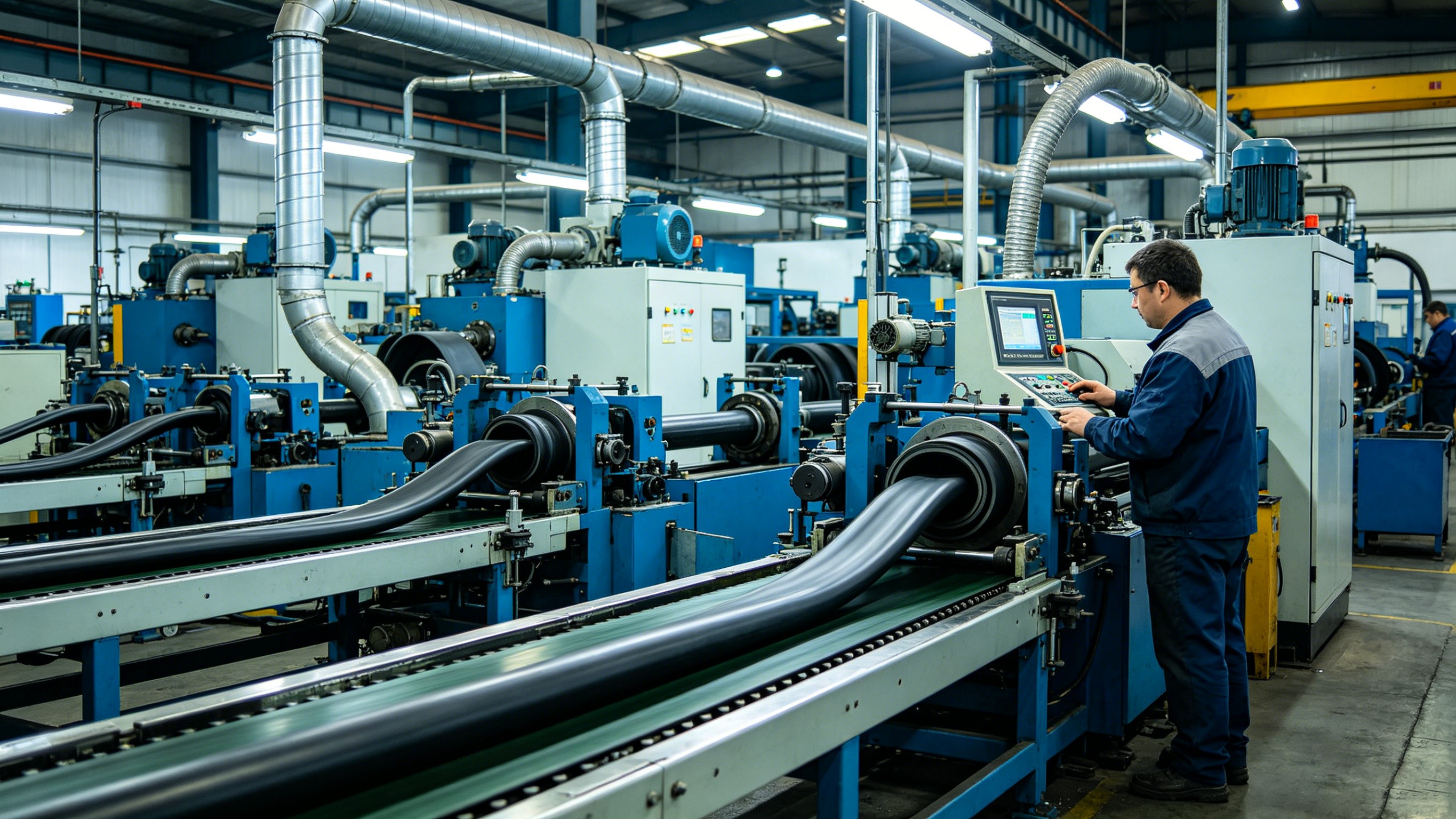
As a hose manufacturer, we produce nylon resin high-pressure hoses, nylon resin pressure measuring hoses, PU polyurethane steel wire hoses, PU polyurethane ribbed hoses, ultra-high-pressure cleaning hoses, and TPV rubber hoses. If you are not sure which hose fits your application, welcome to contact us with your working conditions, and we will recommend the most suitable solution.