Production Process and Quality Control of Nylon Resin Hoses
The quality stability of nylon resin hoses depends not only on material formulation but also on extrusion process, reinforcement structure, cooling and sizing, inspection methods, and batch management. For hydraulic, pneumatic, lubrication, industrial fluid transfer, and specialized applications, hoses must maintain long-term reliability under pressure, temperature, media, and mechanical stress. Therefore, establishing a stable production process and strict quality control system is an important foundation for ensuring product consistency and reducing after-sales risks.
Main Production Process Flow
The typical production process of nylon resin hoses usually includes raw material preparation, melt extrusion, reinforcement layer compounding, cooling and sizing, traction and coiling, cutting and inspection, and packaging. Different product structures vary in the inner layer, reinforcement layer, and outer layer.
Common process steps are as follows:
1.Raw Material Preparation and Drying
Nylon resin is sensitive to moisture and usually requires thorough drying before extrusion to reduce issues such as bubbles, silver streaks, dimensional fluctuations, and decreased mechanical properties.
2.Inner Layer Extrusion
The inner layer is in direct contact with the conveyed medium. Its surface smoothness, wall thickness uniformity, and material purity affect fluid resistance, pressure resistance, and media compatibility.
3.Reinforcement Layer Compounding
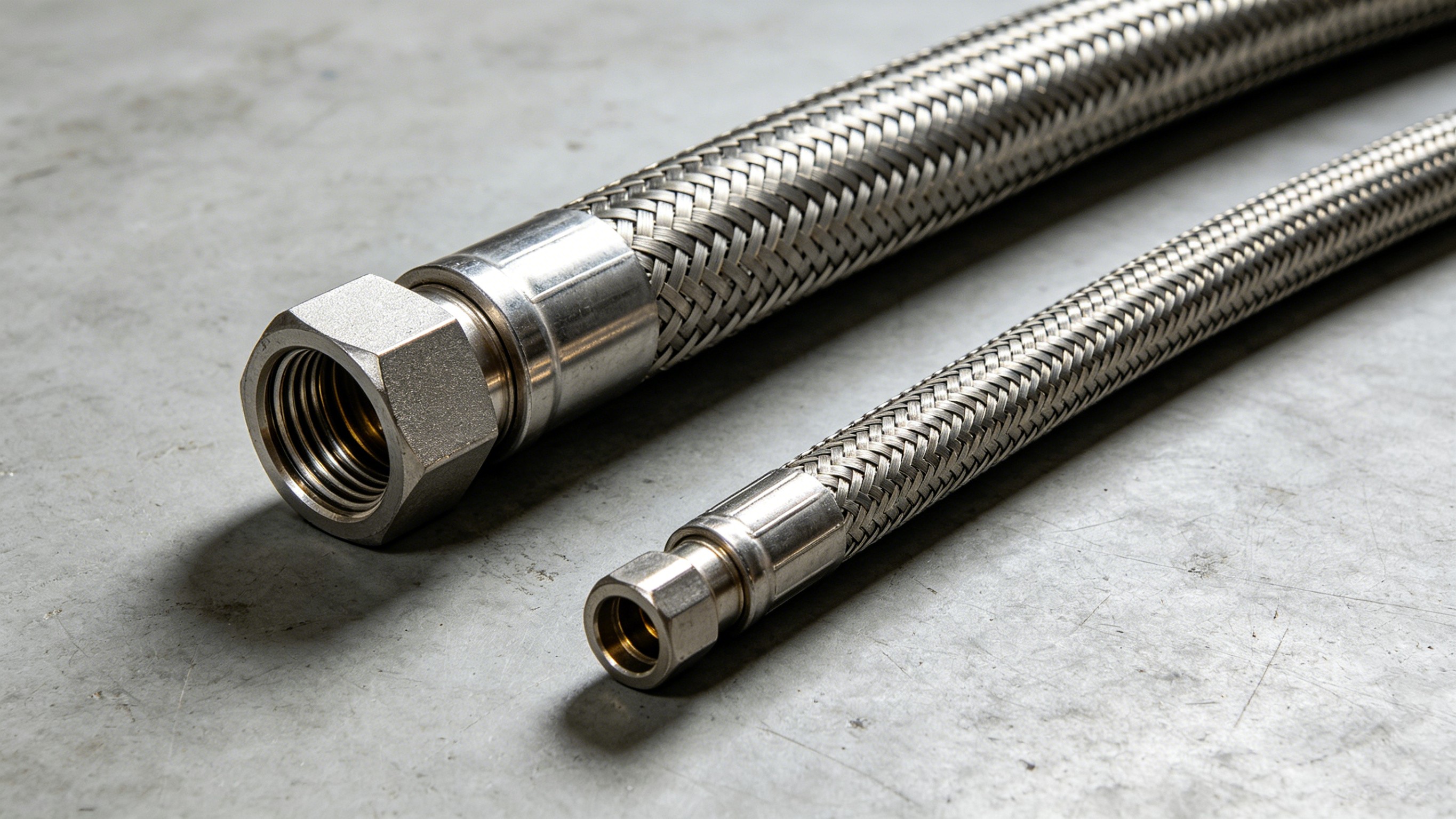
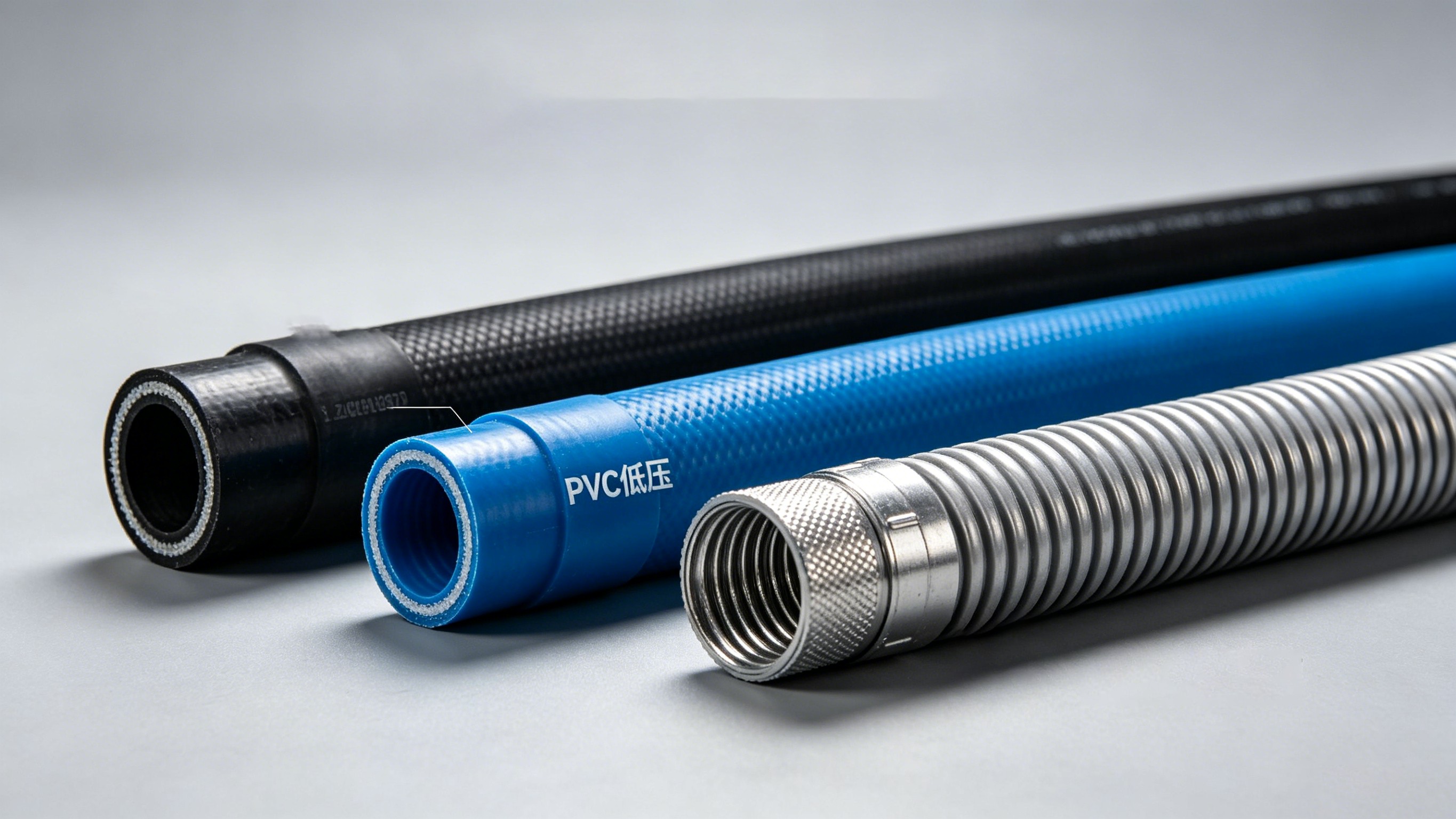
Depending on pressure requirements, fiber braiding, fiber winding, or steel wire reinforcement can be added outside the inner layer. The reinforcement structure directly determines the hose's burst pressure, pulse life, and dimensional stability.
4.Outer Layer Extrusion
The outer layer mainly provides protection, wear resistance, weather resistance, and appearance. Different colors, hardness levels, or surface treatments can be selected based on the operating environment.
5.Cooling and Sizing
The cooling process affects tube dimensions, roundness, internal stress, and surface quality. Insufficient cooling may cause deformation, while excessively rapid cooling may affect interlayer bonding and dimensional stability.
6.Traction, Coiling, and Cutting
Traction speed should match extrusion speed to avoid excessive stretching, uneven wall thickness, or outer diameter fluctuations. Excessive coiling tension may cause flattening or deformation.
7.Final Inspection and Packaging
Finished products must undergo appearance, dimensional, pressure, media compatibility, and other performance tests according to standards before packaging and storage.
Key Quality Control Points
1. Raw Material Quality Control
Raw materials are the foundation of hose performance. Key concerns include:
.Nylon resin grade, melt flow index, moisture content, and batch consistency;
.Whether recycled materials, modified materials, or additives are used, and .whether the addition ratio is stable;
.Whether the raw material storage environment is dry to avoid moisture absorption affecting extrusion quality;
.For food, medical, or special industry applications, confirm that materials meet corresponding compliance requirements.
2. Extrusion Process Stability
Extrusion temperature, screw speed, die design, and traction speed all affect tube quality. Control points include:
Maintain stable extrusion temperature to avoid material degradation or poor plasticization;
Control concentricity of inner layer, reinforcement layer, and outer layer to reduce eccentricity;
Ensure uniform wall thickness to avoid local weak points;
Control surface smoothness to reduce scratches, bubbles, impurities, and flow marks.
- Reinforcement Layer Structure Control
For high-pressure nylon resin hoses, the reinforcement layer is the key structure determining pressure resistance. Focus on:
.Material, diameter, and strength grade of fibers or steel wires;
.Braiding angle, braiding density, or winding spacing;
.Bonding condition between reinforcement layer and inner/outer layers;
.Whether the reinforcement layer is evenly covered without gaps, broken wires, or local looseness.
Uneven reinforcement layers may cause local bulging under high pressure, reduced burst pressure, or shortened pulse life.
4. Cooling and Sizing Control
The cooling system should ensure uniform tube shrinkage to avoid excessive ovality or dimensional fluctuations. Key checks include:
.Cooling water temperature, cooling length, and cooling rate;
.Whether tube outer diameter, inner diameter, and wall thickness are within tolerance;
.Whether tube roundness is good without flattening or deformation;
.Whether interlayer bonding is firm without delamination or blistering.
5. Finished Product Testing Items
Finished product testing should be set according to product application, customer requirements, and relevant standards. Common items include:
.Appearance inspection: Check for bubbles, impurities, scratches, deformation, uneven color, etc.;
.Dimensional inspection: Measure inner diameter, outer diameter, wall thickness, ovality, and length tolerance;
.Pressure testing: Verify hose safety under specified pressure;
.Burst pressure testing: Evaluate the hose's ultimate pressure-bearing capacity;
.Pulse testing: Simulate pressure fluctuation conditions to assess fatigue life;
.Bending performance testing: Check flexibility and condition after repeated bending;
.Media compatibility testing: Confirm hose compatibility with hydraulic oil, grease, air, water, or other media;
.Temperature resistance testing: Verify dimensional and mechanical stability under high and low temperatures;
.Fitting pull-off testing: If hoses are fitted with connectors, test connection reliability.
Batch Management and Traceability
For industrial hose manufacturers, batch management is particularly important. It is recommended to establish the following mechanisms:
.Retain grade, batch number, receipt date, and test report for each batch of raw materials;
.Record extrusion temperature, traction speed, reinforcement parameters, and operator information during production;
.Conduct sampling inspection by batch for finished products and retain records;
.Retain samples for important customer orders for subsequent quality traceability;
.Analyze causes for abnormal batches and form an improvement loop.
A good traceability system not only helps quickly identify quality issues but also enhances customer confidence in product quality stability.
Conclusion
The production quality of nylon resin hoses depends on comprehensive control of raw materials, process, structure, inspection, and management. Stable drying and extrusion processes ensure dimensional and appearance consistency, reasonable reinforcement layer design improves pressure resistance and pulse life, and a comprehensive inspection system helps detect potential risks in time. For products targeting hydraulic, pneumatic, industrial fluid transfer, and specialized applications, establishing standardized production processes and a traceable quality management system is a key foundation for improving product competitiveness and reducing after-sales risks.